
Grief, Hope, Mental Health

A Mother’s Heart: Reflections on Grief and Hope

A couple of years ago, I felt a sensation I had not felt for some time. The only way to describe it is a guttural cry welling up in the pit of my stomach. It was such a deep and sorrowful feeling, and it rose through my throat and out of my mouth as a wailing cry. That’s the only way I can describe it. Have you ever felt this way?

Sometimes we have no choice but to suppress something so ugly-sounding, because we don’t want anyone around us to hear it. At other times, we either have the luxury of releasing our sorrow or simply don’t care who hears or sees it.

This deep sorrow overcame me after I spent hours on the phone trying to reschedule my flight to my dad’s memorial service after a snowstorm that day caused it to be cancelled.  When it was clear I wasn’t going to get to the service, I was overcome with this deep sorrow and released this guttural wailing cry. It was such a sorrowful sound that it frightened my husband. He’d never heard me cry like that before.
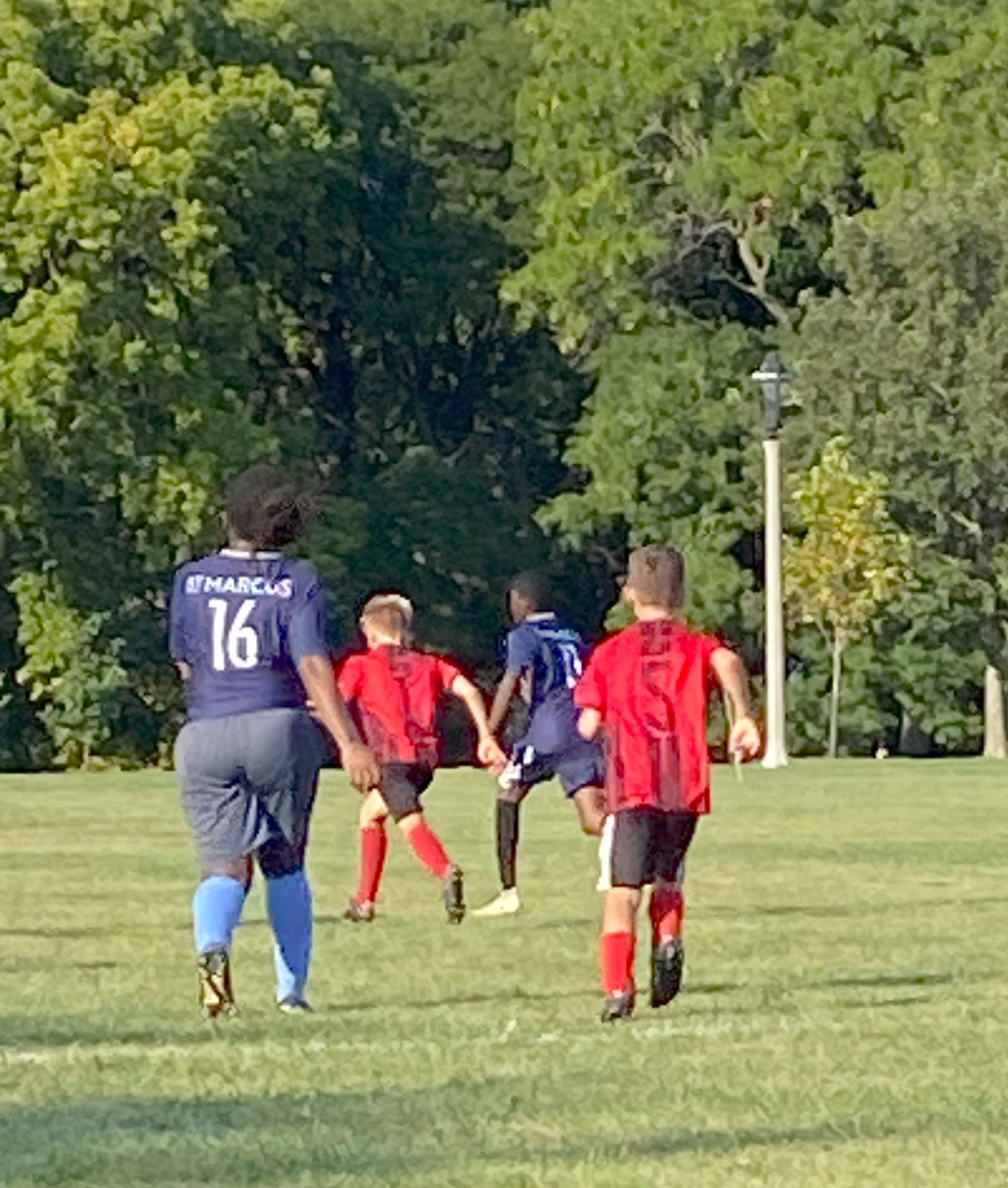

Yesterday afternoon, I watched my grandson play soccer. It was beautiful outside, and it should have been a pleasant experience for me. My grandson was playing against an elementary school our three older children had attended, and my husband and I kept running into people we knew but hadn’t seen for several years. Sorrow started to overcome me when my husband started talking with one of our oldest son’s classmates.

“Hi, Mr. Leverence. Do you remember me?”

“Oh, of course, Casey. It’s so good to see you. You were in Aaron’s class, weren’t you? Do you have children playing soccer?”

“Yes. I have a fifth-grade son and an eighth-grade son playing, and I have a daughter in high school.”

The guttural cry started to build in the pit of my stomach.

“Wow! That’s so cool.”

As we walked away, Casey made one more passing remark that caused my sorrow to build a little deeper and stronger.

“It was nice to see you, Mr. Leverence. Please say “hi” to Aaron for me.”

You see, Aaron, our oldest son, lives in a CBRF, Community-Based Residential Facility, at a neuro-rehab hospital. He is very physically and mentally disabled. When Casey knew him, he was far healthier. There was no reason at that point in Aaron’s life to doubt that he would marry someday and have a family like Casey. After all, Aaron was a very intellectually gifted teenager. He was on track for a normal adolescent life and a promising future.

Unfortunately, Aaron developed a very difficult-to-treat case of schizophrenia when he was 15. In the past 26 years since then, he’s heard voices telling him to jump out of windows, over balconies, and in front of cars. These actions have contributed to severe physical disability in addition to being severely mentally disabled.

When Aaron’s having a good day, he’ll tell me, “Mom, I really want to get married.” He’ll even tell me who he wants to marry. He’s been infatuated with one girl he knew when he was in high school, and he’s convinced she’s still available for him to marry. He so desperately longs for the kind of life Casey has. My response to Aaron is always, “When the time is right for you to get married, God will bless you with a wonderful woman to marry.” Though I know that I’m being less than truthful to Aaron. He will never marry. His physical and mental conditions are too extreme for any woman to consider marrying him.

Seeing Casey and hearing about his family brought me such deep sadness that I couldn’t wait to get away from that environment. I didn’t have the luxury of releasing that guttural wailing cry on the sidelines of my grandson’s soccer game.


Grief can overcome almost anyone, regardless of age or the magnitude of the loss. A child might be overcome by grief simply by losing their favorite blankie, hindering their ability to go to sleep at night; adults are overcome by grief for any number of reasons, such as divorce, the passing of a loved one, and persistent lack of work.

According to Psychology Today, “Grief is the acute pain that accompanies loss. Because it is a reflection of what we love, it can feel all-encompassing.” Grief is not a single emotion, but rather a complex mixture of different emotions that come and go, with sadness being one of the most prevalent. Grief should not be ignored. While living our lives to the best of our ability and following our normal routine may help us manage our grief for some time, it likely won’t be enough. Journaling, therapy, seeking spiritual guidance, and spending time with friends can help us move through our grief.


To temper the deep sadness I felt about missing my dad’s memorial service, I reminded myself that while I was missing the opportunity to mourn alongside my mother, siblings, and extended family, it didn’t take anything away from the fact that my dad was no longer feeling any pain, but rather he was resting peacefully in his Savior’s loving arms. I knew this deep sadness would soon pass.

To temper the deep sadness I feel when I’m faced with the fact that my dear Aaron won’t get married and have a family, I remind myself that our earthly existence is just a temporary state. This is not Aaron’s permanent home. Like all of us, he’ll only be here for a short time. After he’s sprinkled enough gospel seeds to his neighbors and staff in the CBRF or other institution he’s living in, God will call him to his true home, heaven. Aaron has what matters most. He has what matters more than the earthly blessing of marriage and a family. He has faith in his Savior, Jesus. He believes that Jesus lived, died, and rose from the dead for him, and that saving faith ensures he’ll be in heaven. That’s really all that matters, and for that I’m more than grateful!

I may never be free from the different emotions of sadness, regret, and pain that make up my grief over the trajectory Aaron’s life took when he developed schizophrenia, but I have learned how to manage it and live life doing my best to focus on what matters most.

https://www.psychologytoday.com/us/basics/grief

Mental Health

Facing Regret: Finding Peace and Healing

Regret. I so desperately wish I could let go of it! I carry it around with me from day to day and from year to year. It sits silently in the back of my mind most of the time. Unfortunately, it occasionally comes out to torment me.


When my three adult children left the house, there were only three of us remaining—my husband, my 6-year-old son, and me. The five-bedroom house was just too big! We were tired of doing yard work and bearing the responsibility of home ownership, so we decided to sell and move to a condo. We had a moving sale to downsize our belongings., and then we sold our over 3,000 square foot house and purchased a 1,600 square foot condo. It was located near an elementary school for our son, and it had a swimming pool overlooking Lake Michigan where we could spend time during the summer months. We loved it!

That was about 14 years ago. If I let myself go there, I start stewing with regret over selling that house. My daughter and son-in-law decided to sell their home a few years after we moved, and due to the volatile housing market, they had a difficult time finding a new one. They ended up having to live in an apartment for a couple of years. Our granddaughter’s health suffered due to mold in one of the apartments where they lived. The stress of building a house, something they didn’t really want to do, was hard on the entire family. If only we hadn’t sold our house! They could have lived in two of the three empty bedrooms. I also ruminate on whether it was the best home for my six-year-old son. So much regret!

All my children have some degree of mental health issues. Gratefully, for three of my four children, the issues are minor. My oldest son, Aaron, has a difficult-to-treat case of schizophrenia. He began to get sick when he was fifteen years old. It has been challenging over the past 26 years balancing the care for Aaron and the rest of our children. I sometimes reflect on how my husband and I managed our son’s illness. We tried so hard to give him the best quality of life possible, despite his illness. Did we spend too much time trying to help Aaron at the expense of our other children? If we had relinquished Aaron’s care to the professionals, would our other children have fewer emotional issues? Would they be less anxious and more emotionally stable? If I let myself go there, I start stewing with regret over not giving my healthy children more attention.

The thing is, I couldn’t have known when we sold our house that my daughter and her family would need a temporary place to live. I can’t say today if anything my husband and I did to care for Aaron negatively impacted our other children. I don’t have a time machine that enables me to go back to the past for a do-over. Even if I could travel back in time and make different decisions, I couldn’t possibly know the outcome of those decisions. When I’m thinking clearly, I know that harboring regret is unhealthy for me. In these situations, it isn’t very reasonable. After all, my life and the lives of my children might be BETTER because of the decisions we made about the house and our son’s care. There is no way to know!


An incessant focus on regret also prevents us from seeing the blessings that flow into our lives because of the decisions we’ve made. When we set aside the feelings of regret and frustration with the circumstances we’re facing, we can see the emotional and spiritual growth we’re experiencing. There is both good and bad in all circumstances.

While at times regret can result in positive outcomes, it is often unhealthy. In her article,  The Psychology of Regret, Dr. Melanie Greenberg demonstrates this:

For young people in particular, regret, although painful to experience, can be a helpful emotion. The pain of regret can result in refocusing and taking corrective action or pursuing a new path. However, the less opportunity one has to change the situation, the more likely it is that regret can turn into rumination and trigger chronic stress that damages mind and body.

While it is challenging, we must stop blaming ourselves for the decisions we made in the past and forgive ourselves when the outcomes appear to have undesirable consequences. Inability to accept our circumstances and appreciate the outcomes of our decisions can be harmful to our mental health. One thing that has been helpful for me is meditation. It helps me to be mindful and to focus on the present. When I can be more present, I’m less likely to stew on regret. I am hopeful that, over time, my regrets will either be stored permanently in the back of my mind or fade away entirely. It is essential to let go of regret to maintain a healthy mind and body.

Empathy, Mental Health

Kindness First: A Lesson from Personal Struggles

There’s some debate about a quote that is particularly meaningful. Was it spoken by Plato or Socrates? Could it have originated with Philo? Or did Ian MacLaren first articulate it in the 1897 Christmas edition of The British Weekly? Regardless, my favorite version of this quote does not come from any of these individuals but rather from Robin Williams:

“Everyone you meet is fighting a battle you know nothing about. Be kind. Always.”

This quote is worth sharing. Somebody can even post it on their cubicle wall at work or place it under a magnet on their refrigerator. It’s that meaningful.

This quote is a good reminder to be gracious toward all people. I should not judge others, especially people I don’t know very well. However, I have also been judged by others. I’ll share one of those times with you. I assume you have a relatable personal experience as well.

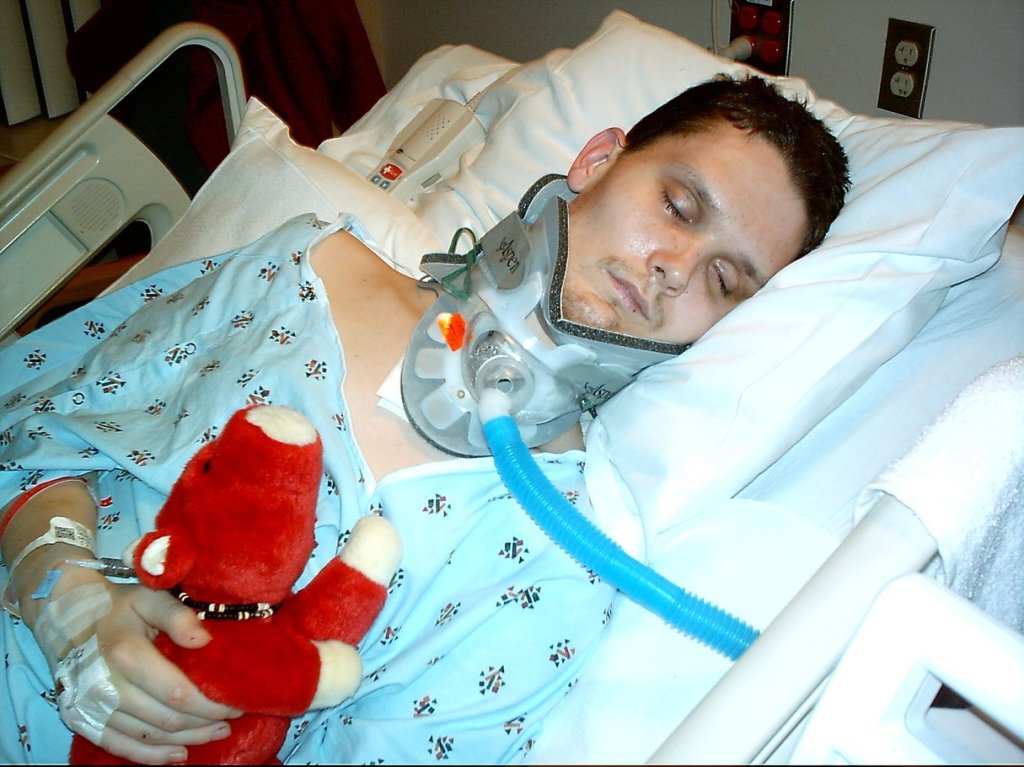
It was January 2006. I was driving my 21-year-old son, Aaron, to the nursing home where he was living at the time. Aaron has a very hard-to-treat case of schizophrenia. The nursing home was a safe place for him to stay while my husband and I were at work. Because Aaron became agitated, I pulled over to the shoulder of the highway to try to calm him down. Unfortunately, he got out of the car and stepped into traffic, where he was hit by a car. As a result, he had many broken bones, one being his femur bone. During his surgery to repair his broken femur, the fat globules from his bone entered his bloodstream. They lodged in the small blood vessels of his brain, causing many strokes. As a result, he had severe brain damage. He went into a coma and was fighting for his life.

This ordeal was very traumatic for my family and me. We had three other children at home, including a 1-year-old. My husband and I alternated spending evenings at the hospital with Aaron. The other evenings were spent at home with our other children. We strongly felt that it was essential to live as normally as possible for the sake of our family. Therefore, my husband and I resumed our full-time work schedules after a week from work. It wasn’t easy for either one of us. When we weren’t at work, we were either parenting solo at home or at the hospital with Aaron. To say I was a little sleep-deprived and emotionally spent was an understatement.

Yet, going to work was healthy for me. It distracted me from my concerns for Aaron. I was capable of doing my job well for the most part. Many of my co-workers knew my situation and were empathetic and understanding. Coincidentally, I got a new manager a few weeks after Aaron’s accident. We had exchanged no more than a hello. She wasn’t aware of my son’s accident.

One afternoon, I was meeting with a room full of people, including my new manager. Someone was giving a presentation.  It was a sunny afternoon, and someone turned the lights off to let everyone see the presentation better. Unfortunately, the time of day, the darkened room, and my sleep deprivation caused me to get a little drowsy. I was sitting near the screen in the front of the room, and my drowsiness was noticeable to others.  My new manager was one of them.

A few days passed since that meeting. Another person in our department approached me. They mentioned that my new manager told them she was disappointed in my lack of enthusiasm and disinterest in work. They asked why she had this impression of me. She told them she had seen me nodding off in a critical meeting. Thankfully, my colleague told my new manager that her impressions of me were inaccurate. I was nodding off in the meeting because I was spending evenings at the hospital. My son was in a coma.  

My new manager’s reaction wasn’t even remotely out of the ordinary. Have you ever worked with someone not pulling their weight on a project? Or have you seen a stranger behaving erratically in public? What was your first reaction? Often, we think badly of them. Ideally, we should look at them with empathy and kindness. We don’t know what personal battles that person is fighting. They could be experiencing something in their life that justifies their behavior.

Seeking to gain understanding before forming an opinion of someone is especially important when in a leadership position. It would have been kinder for my new manager to approach me first. She should have asked me how I was doing before formulating a negative view of me. I was fighting a difficult battle she knew nothing about at that moment. I needed her empathy and kindness instead of criticism.

Mental Health

Positive Surroundings Elevate Well-Being

“It has to be in this drawer,” I thought as I rummaged through my desk, searching for something. Before I knew it, I emptied out two drawers I rarely use. Wow! Who knew these drawers held so many memories?

I’ve always believed in surrounding myself with things that lift my spirit and keep my mind focused on the positive. When I worked professionally, my cubicle walls were covered with inspirational quotes I had read in emails, found online, or discovered in books. Alongside them were family pictures and heartfelt notes from my children. Our mental health is deeply connected to the people and things we surround ourselves with, and having these reminders in my workspace was invaluable.

It’s been almost three years since I retired. Yet, here I was, rediscovering these pieces of encouragement buried in my desk drawers. Rereading them stirred up so many emotions. They reminded me of the type of leader and colleague I strived to be—the one who lifted others up and made their day a little brighter. A part of me misses those coworkers. I truly cherished them.

But those days are behind me now. While I’m no longer around coworkers, I’m still surrounded by people—my family, neighbors, fellow choir and church members, the children I serve lunch to, and the students I guide as a substitute teacher. The opportunities to lift others up haven’t disappeared; I likely have more now than I did in the workplace.

So why were these positive messages hidden away in a drawer? I need to see them! I need those reminders every day.

Retiring from professional life doesn’t mean our impact on others fades. If anything, I now have more time to offer kindness. I can prepare a meal for a family welcoming a new baby, send a note to someone grieving or recovering from illness, step into a classroom when a teacher needs to be away and serve lunch to my grandchildren and their classmates once a week. These purposeful opportunities fulfill my continuing wish to lift others up and make their day a little brighter.

I’m so grateful I emptied those drawers! Among the notes, I found a quote from Brendon Burchard: “I simply choose to be happy now, to be grateful now, to be a source of love and light for others.” No matter our age, vocation, or stage in life, surrounding ourselves with uplifting people and positive reminders is essential for our well-being.

Now, all I need is a tack. This inspirational quote belongs on the wall—not buried in a drawer.

Mental Health

The Stigma of Mental Illness vs. Physical Illness

On a sunny August afternoon, I came home from work. I found my 17-year-old son, Aaron, lying on the sofa moaning in pain.  He was very nauseated and running a fever.  That night we took him to the Emergency Room where a CT scan revealed he had appendicitis.  His appendix needed to be removed as soon as possible.  The surgery was scheduled immediately, and gratefully it went smoothly.

The next morning we came back to the hospital to visit Aaron.  Knowing what room he was in, we simply walked through the door of the hospital and took the elevator to the floor where he was staying.  No one stopped us at the hospital entrance and asked who we were visiting.  They never called the nurse’s station on the hospital floor to get permission for us to go to his room. They did not ask us to lock up our personal belongings. We did not have to go through a metal detector before visiting him.  It seems absurd, doesn’t it? Why should you have to pass through metal detectors to visit your loved one in a hospital?

When Aaron was fifteen he became very ill with a difficult-to-treat case of schizophrenia.  As a result, he has spent a lot of his life passing through different mental health facilities.  Every time we visited Aaron at the Milwaukee County Mental Health Complex, we stopped at the front desk. We had to tell them who we came to visit.  They called the ward where he was staying to get permission for us to see him.  Once they confirmed it was ok for us to continue, they had us lock up our belongings.  Finally, they took a metal detecting wand and checked our front and back for weapons.  This process caused me to shake my head in wonderment.  Was my son in a hospital or was he in a prison?

The differences between many Mental Health facilities and hospitals that mainly treat people’s physical issues are noticeable. They don’t just stop at the lobby.  Most hospital rooms are outfitted with comfortable beds, televisions, and walls painted with pleasant colors intended to calm and comfort the patient.  In many mental health facilities Aaron was admitted to it looked like the walls had not been painted for years.  The rooms were often shared by patients. Each patient only had a low platform bed to sleep on.  Patients considered themselves lucky if there was one working TV in a common room. There were only a few channels for them to choose from. Having a TV in their room was out of the question.  I understand that the stark nature of the furnishings and bed linens is intentional. It aims to keep people safe from personal harm.  Still, shouldn’t the intent also be to create a calm and comforting environment to help the patient heal?  I rarely walked into a calm and comforting environment when walking through the halls of a mental health facility. 

Is it any wonder that many people with mental illness don’t seek help for their disorders?  According to the American Psychiatric Association, stigma surrounding mental illness prevents over half of people with mental illness from receiving help for their disorders.  The 3 types of stigma researchers identify are public stigma, self-stigma, and institutional stigma.  Institutional stigma promotes policies. These policies create significant disparities in the environment and care people receive in mental health facilities compared to hospitals for the physically ill.

Aaron is 40 now.  I have observed the institutional care he has received for the past 25 years. I have only seen limited positive change, if any.  In recent years, mental illness has gotten more visibility. This is due to the impact many have felt from COVID-19 and the social policies created because of it.  This is unfortunate, but at the same time, I’m hoping it is a blessing in the long run.  When more people talk about mental illness, understanding increases. With greater understanding, the likelihood of positive change will finally be realized.  Institutional stigma can be reversed.

“Stigma, Prejudice and Discrimination against People with Mental Illness.” Psychiatry.org – Stigma, Prejudice and Discrimination Against People with Mental Illness, Jeffrey Borenstein, M.D., Aug. 2020, https://www.psychiatry.org/patients-families/stigma-and-discrimination.

Mental Health

Like a Thief in the Night

“Like a thief in the night” is an idiom used for thousands of years, originating from the Bible. 1 Thessalonians 5:2 states, “the Day of the Lord will come like a thief in the night.” Like many authors and songwriters, I will use this idiom to describe what I have experienced with my son. Mental Illness is like a thief in the night, unexpectedly robbing many of their abilities, skills, and life ambitions.

As parents, we can be known to exaggerate our children’s abilities. It is no exaggeration, however, that my oldest son, Aaron, was a talented artist.  At the young age of three, he was drawing cartoons like a professional cartoonist. He could reproduce well-known cartoon figures like the Mario Brothers characters. It was a gift! His drawings would start as a few lines and swoops, and suddenly, a perfectly drawn Mario, Koopa Troopa, Bowser, or Daisy would materialize on his sketch pad. As Aaron grew older, his artistic skills matured, and he won awards because of them.  As a teenager, he especially liked to draw pretty girls and baseball players.

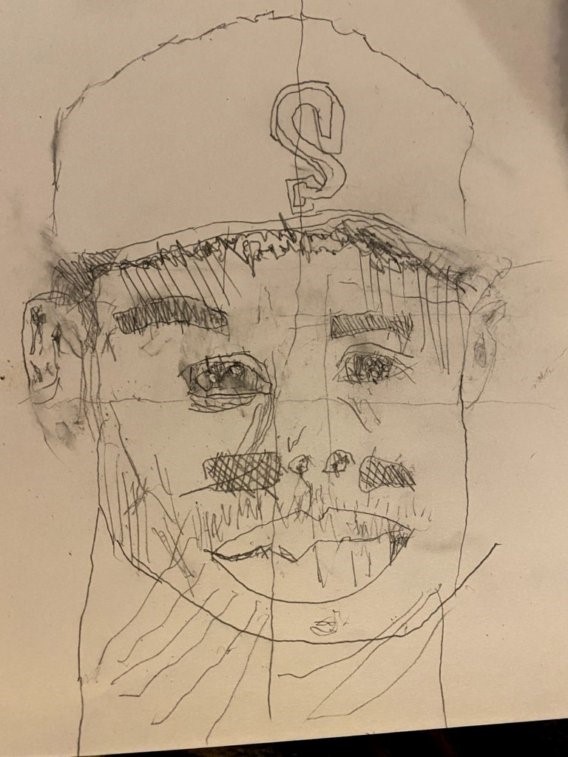
Shortly before Aaron showed mental illness symptoms, we noticed his drawing skills getting worse. After over 25 years of severe schizophrenia, Aaron can barely draw anymore. To show how much schizophrenia has affected his drawing, look at these pictures. Aaron drew the picture on the left a year before his symptoms appeared; he drew the middle picture several years ago, and he drew the picture on the right in the last couple of years. Aaron hasn’t drawn in months. His illness has not only robbed him of his ability to draw but also his ability to write, read, and sometimes even remember what day it is.

While Aaron is affected more than anyone by what he’s lost because of schizophrenia, we’re all affected indirectly.  Aaron was on a trajectory to becoming a very productive member of society.  He was above average intellectually, and when he was 13 years old, he enjoyed programming computer games.  Now, instead of contributing to our society as a software engineer for a computer gaming company, he is one of more than 12,000 people under 65 receiving Social Security Disability benefits.  Aaron wants to work, but schizophrenia has robbed him of this privilege.

Mental illness does not impact everyone as significantly as it does Aaron, but about 20% of all U.S. adults, regardless of gender, race, age, or socio-economic background, suffer from a mental health disorder. The impact on the economy is staggering.  A report commissioned by the American Heart Association CEO Roundtable identifies an annual cost of $210 billion to the American economy due to depression alone. Because so many mental health disorders go unreported, this cost is undoubtedly far greater than identified.

With staggering costs to the economy and so many affected by mental illness, it’s surprising how little the federal government invests in Mental Health Research. While the budget for the National Institute of Mental Health (NIMH) rose to $2.14B in 2022, it’s still a fraction of the $6.9B allocated to the National Cancer Institute (NCI) during the same time. More attention and resources ought to be applied to preventing and managing mental illness in the United States from both the public and private sectors.

Minimizing the impact of mental illness on individuals, families, and the nation is something I believe most agree is very important. We need to unite as a nation to provide mental health care for everyone in our communities so we don’t lose anyone to this “thief in the night”, mental illness.

https://www.ssa.gov/

Mental Health, Uncategorized

Starting the Conversation

Regardless of what church you attend, it is likely you’ll be led by the pastor in prayer on the behalf of and in support of other members of your congregation, community, country, or even someplace else in the world.

The pastor might say something like, “Now, let us come together in prayer for Jim who’s in the hospital recovering from back surgery, and Barbara who was recently diagnosed with cancer.”  Have you ever heard a Pastor say, “Please join me in praying for Joe as he struggles with severe depression”?  I haven’t.  I’ve never heard a Pastor say anything remotely close to that in a church service because Joe doesn’t want anyone to know he suffers from depression. He’s afraid if they know he has depression, they might look at him differently.  Some people will even try to avoid him.

My son, Aaron, first became ill with a mental illness when he was a freshman in high school, many of his teachers came right out and told us they couldn’t understand why he couldn’t just suck it up and manage his behavior.  He needs to be more attentive in class.  He needs to focus on his schoolwork.  It’s his own fault he’s having so much difficulty. That was more than 23 years ago, but sadly I’m not sure much has changed since then.  People are still reluctant to disclose to others when they have a mental illness because there are so many stereotypes and prejudices against people with mental illness.

The only way we can affect change around mental illness is to start a conversation about it.  According to the American Psychiatric Association, one way we can positively influence reducing the stigma associated with mental illness is to speak out and share our personal stories.  My son, Aaron, can no longer effectively share his story.  His mind and body have been severely disabled due to his mental illness.  Once an avid personal journalist and artist, he can no longer pick up a pencil and write down his thoughts or as easily draw a picture.  With his permission, I am speaking out on his behalf and sharing his and my personal stories about mental illness.

According to the National Institute of Mental Health nearly 1 in 5 adults in the U.S. experience mental illness in a given year, and that number is higher for adolescents.  With so many people affected by mental illness, why are we so reluctant to talk about it?  When Aaron first became ill with schizophrenia, my husband and I did a lot of research on mental illness.  Mental illness is due to a chemical imbalance in the most complex part of the human body, the brain.  The specific chemicals in the brain that are out of balance, known as “neurotransmitters”, are dopamine, serotonin, and glutamate.   Very few people are afraid to disclose to others when they’re having a problem with their liver or gall bladder, or other more minor organs in the human body, but when the most complex part of their body, their brain, is failing they’re afraid to talk about it with people. This must change.

Interestingly, when I disclose that I have a son who suffers from schizophrenia to a co-worker or acquaintance, it is not uncommon for them to tell me about their son who has bipolar disease or even that they themselves suffer from depression.  It takes only a few simple words to get the conversation started and the impact can be quite beneficial.  These conversations have a ripple effect, because the more we talk about mental health with other people, the less scary and worrisome it will be.

Over time through these conversations, the stigma associated with mental illness will be reduced.  More importantly, however, the ripple effect can reach beyond a reduction in the stigma.  Increased awareness and understanding of mental illness can fuel change in crisis management, care facilities, and medical research.  That is my prayer so that Aaron and others impacted by mental illness can have a better quality of life and be healthy, productive members of our communities.

Mental Health

Happy Holidays?

“Christmas time is here

Happiness and cheer

Fun for all that children call

Their favorite time of year”

A Charlie Brown Christmas” is my favorite holiday movie, and the music of Vince Guaraldi plays a big role in why I love it. However, the holiday season isn’t always “fun for all.” For individuals and families affected by mental illness, this time of year can often bring more stress than joy. Anxiety stems from the uncertainty of how a mentally ill child or family member will react to the excitement and commotion. Additionally, the disruption of routines—a hallmark of the holidays—can become a trigger, leading to setbacks or a decline in mental health.

I can’t deny that while I’m a mainly optimistic and cup-half-full type of person, my anxiety level is slightly elevated.  Our son, Aaron, developed schizophrenia in 1999 when he was 15.  We have had several difficult holiday seasons over the past 22 years since Aaron became ill. 

Christmas 2002 was one of the tougher Christmases.  Every mother’s greatest Christmas joy is having all her children with her.  I don’t need or want any gifts really.  I just want to be surrounded by the people I love most, my husband and children.  That’s what made Christmas 2002 so hard.   Aaron was missing.

Between the ages of 18 and 21, Aaron spent a significant amount of time institutionalized at Winnebago Mental Health Institute in Wisconsin—a highly uncommon experience, made necessary because the psychiatrists at our local public mental health facility refused to treat him. Aaron is medication-resistant, which makes managing his schizophrenia particularly challenging. While many individuals with schizophrenia can lead relatively normal lives with the right combination of therapy and medication, Aaron continues to struggle despite being prescribed numerous treatments. He frequently experiences delusions and psychosis, requiring constant, one-on-one supervision to ensure his safety during challenging times. During these delusional episodes, Aaron is at risk of self-harm. Due to the severity of his condition, local psychiatrists opted to send him to Winnebago Mental Health Institute rather than manage his care themselves.

We believed Aaron’s mental health would improve if he spent more time with his family. Every Friday, we would drive an hour and a half to Winnebago to pick him up, and every Sunday, we would make the same trip to take him back. This routine depended on receiving clearance from the doctors and staff at Winnebago, who would deny a home pass if Aaron was having a difficult week. On December 23, 2002, when we called to arrange Aaron’s pick-up for Christmas Eve, we were told he wouldn’t be leaving the hospital as planned. His behavior had been too erratic, and the doctor didn’t feel comfortable approving a pass. Privately, I wept, but in front of our daughters, I stayed composed—I didn’t want to bring anything but joy to their Christmas.

My husband, Mark, and I couldn’t bear the thought of Aaron, just 18 years old, spending Christmas alone at Winnebago.  It made our hearts ache with sadness.  To ease our grief, we decided to make the three-hour round trip drive to Winnebago on Christmas Eve to wish him a Merry Christmas in person.  We assured our daughters that we would be back in time to get them to church for the Christmas Eve program.

As we drove, I prayed for God to give me the strength to remain cheerful for Aaron and to focus on His love, revealed through the gift of His Son, Jesus. My prayers were answered. I spent a couple of hours with Aaron, reading him the Christmas story he had so often recited as a child during Christmas Eve services at church. That time with Aaron eased my aching heart just enough to allow me to be fully present for our daughters that evening and on Christmas Day.

The mental health decline Aaron experiences during the holiday season is not uncommon.  Several years ago, the National Alliance on Mental Illness (NAMI) conducted a survey where 64% of people with mental illness reported the holidays made their conditions worse.  Having this insight in advance of the holidays and knowing the symptoms to watch for can help mitigate the difficulties a mental health decline can create.   I concur completely with one of the respondents to the NAMI survey.  They advise keeping expectations low and letting your family know in advance of your limits.

I don’t yet know exactly how Christmas 2022 will unfold, but over the years, we’ve learned a lot about how to help Aaron maintain his mental stability. I’m hopeful that by minimizing disruptions to his routine, he—and by extension, the rest of the family—will experience a happier Christmas. That is the gift I wish for more than anything else.

Mental Health

Whole Wellness for our Babies

Aaron was born on Tuesday, April 17, 1984, just before 7:00 am after a 9-hour labor.

As can often be the case, a mother’s delivery of her first child can be a more difficult one. Because Aaron was the first baby, of my four children it was the most difficult delivery for me. It probably took far too long, and they should have considered using forceps, but for some reason unknown to us the doctor did not do that causing Aaron to be in the birth canal for an extended period. When Aaron finally made his appearance, he was blue and quiet. He didn’t start crying for several minutes. His Apgar score was only three. Although not extreme, Aaron was below normal weight – only 6 lbs. 7 oz. He was born 10 days before his due date, but the doctor said he had symptoms of an overdue baby like startling easy and peeling, dry skin.

No one raised any alarms about Aaron’s low Apgar score or the symptoms of being overdue, and while he was less than 6 pounds when he left the hospital, he gained weight quickly and appeared to be completely healthy. In fact, he was better than healthy from what I could see. He was NEVER sick, and he was SO gifted. So, I never gave the events of his birth a second thought, until many years later when he was 15 and he got sick. Though, he wasn’t physically sick.

When the psychiatrist is asking question after question about your child’s health history and social history (i.e. drug use, alcohol use, etc.), all sorts of memories get dislodged, and for me, that was the memory of Aaron’s birth. I started to wonder if the oxygen deprivation at his birth caused a fault in his tiny brain that was festering over the years and was now presenting itself as a mental illness. Why didn’t I see this sooner? Why didn’t our pediatrician see this coming on?

In hindsight, I wish I hadn’t buried the memories of Aaron’s birth so far back into the recesses of my mind. I wish I had discussed it with his pediatrician at his first doctor’s visit, and I wish I would have been more keenly focused on his mental health throughout his entire childhood. Maybe, I could have done something to thwart the mental illness that was now presenting itself.

I don’t know with any certainty that I could have taken action to prevent Aaron from developing a mental illness, but I also don’t know that I couldn’t have. Mental illness is such a difficult thing to treat, and anything parents, caregivers, and pediatricians can do proactively to ensure the health of a child’s mind should be done!

Almost twenty-one years after I gave birth to Aaron, I gave birth to my second son, Kyle. From the time Kyle was born, I have been very attentive to his mental health. I made sure he developed a habit of always wearing a bicycle helmet. I ensure he eats healthy meals and gets plenty of sleep, and I frequently ask him how he’s doing. I will not hesitate to take him to a psychologist or counselor if he says he’s feeling mildly depressed or excessively stressed.

Whatever actions we might take to ensure our children’s minds remain healthy, they need to be deliberate, thoughtful, and specific to each child. We should not be passive about the mental health of our children. We should be managing the complete health of our children, both physical and mental.