

Grief, Hope, Mental Health

A Mother’s Heart: Reflections on Grief and Hope

A couple of years ago, I felt a sensation I had not felt for some time. The only way to describe it is a guttural cry welling up in the pit of my stomach. It was such a deep and sorrowful feeling, and it rose through my throat and out of my mouth as a wailing cry. That’s the only way I can describe it. Have you ever felt this way?

Sometimes we have no choice but to suppress something so ugly-sounding, because we don’t want anyone around us to hear it. At other times, we either have the luxury of releasing our sorrow or simply don’t care who hears or sees it.

This deep sorrow overcame me after I spent hours on the phone trying to reschedule my flight to my dad’s memorial service after a snowstorm that day caused it to be cancelled.  When it was clear I wasn’t going to get to the service, I was overcome with this deep sorrow and released this guttural wailing cry. It was such a sorrowful sound that it frightened my husband. He’d never heard me cry like that before.
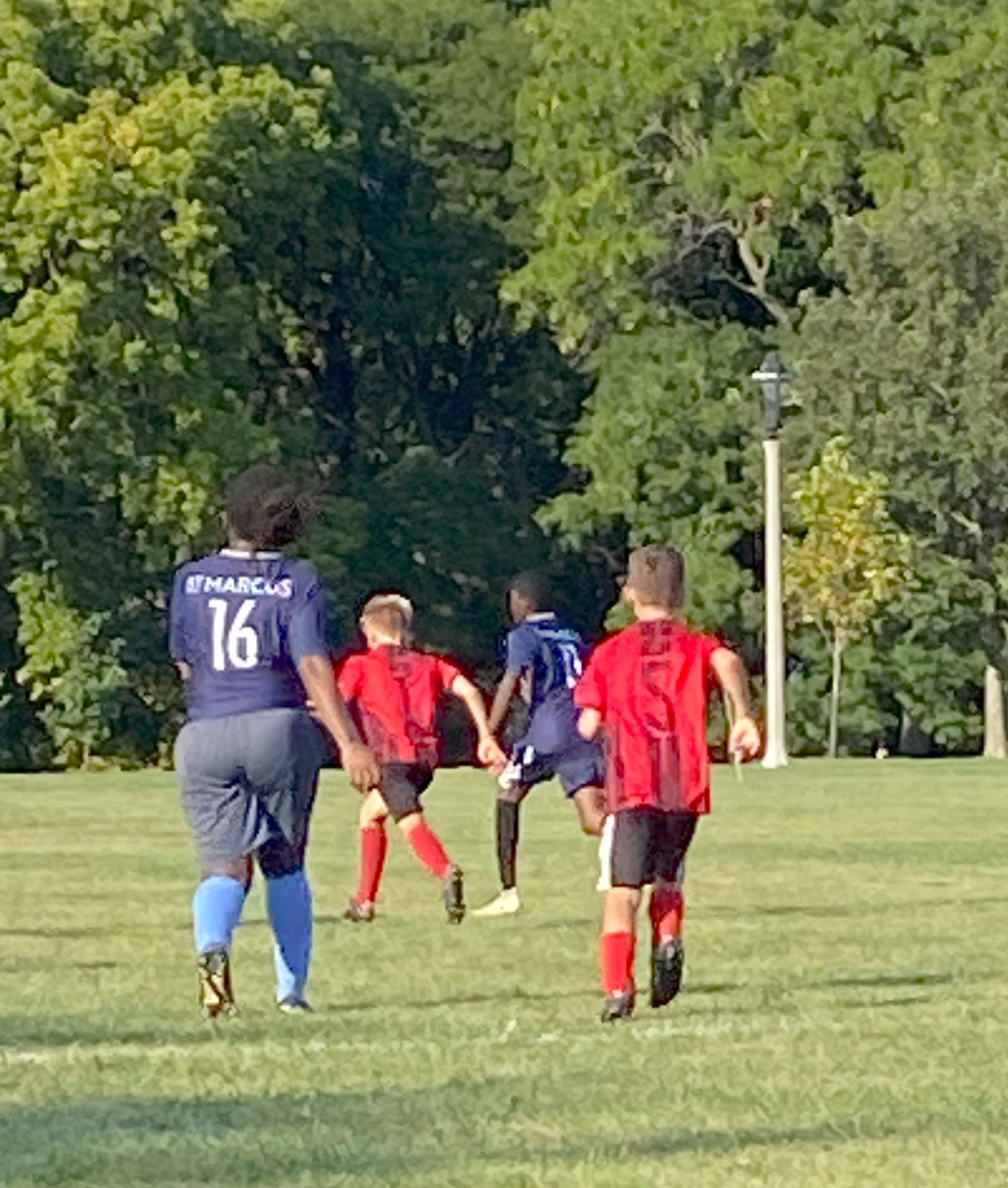

Yesterday afternoon, I watched my grandson play soccer. It was beautiful outside, and it should have been a pleasant experience for me. My grandson was playing against an elementary school our three older children had attended, and my husband and I kept running into people we knew but hadn’t seen for several years. Sorrow started to overcome me when my husband started talking with one of our oldest son’s classmates.

“Hi, Mr. Leverence. Do you remember me?”

“Oh, of course, Casey. It’s so good to see you. You were in Aaron’s class, weren’t you? Do you have children playing soccer?”

“Yes. I have a fifth-grade son and an eighth-grade son playing, and I have a daughter in high school.”

The guttural cry started to build in the pit of my stomach.

“Wow! That’s so cool.”

As we walked away, Casey made one more passing remark that caused my sorrow to build a little deeper and stronger.

“It was nice to see you, Mr. Leverence. Please say “hi” to Aaron for me.”

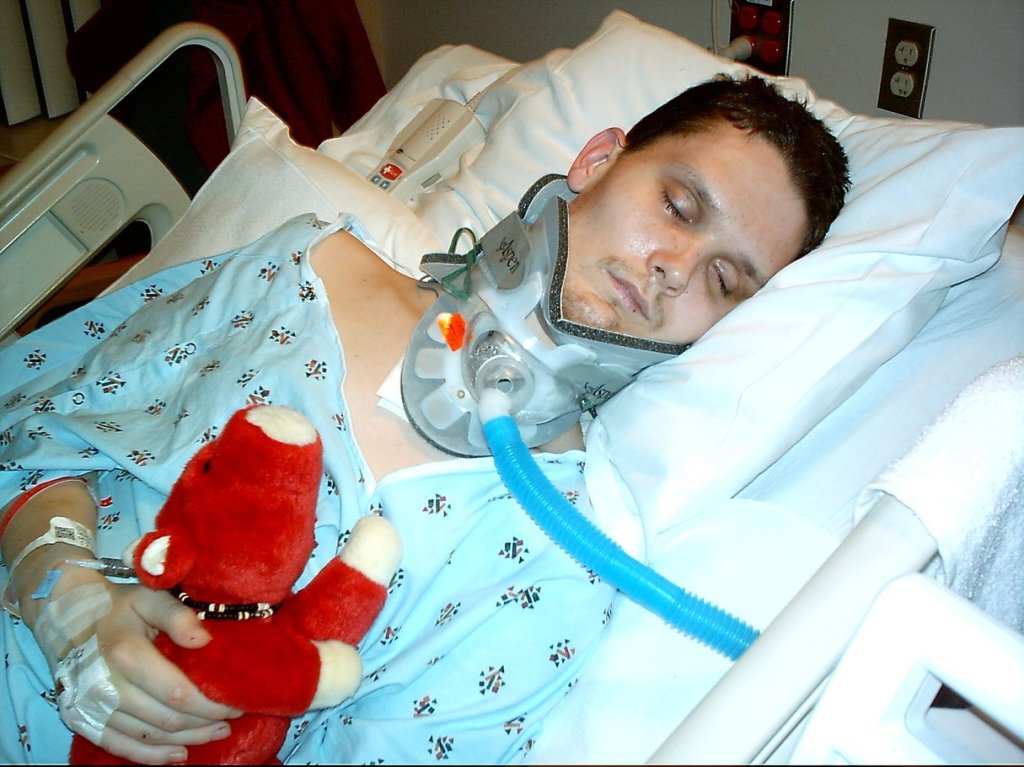
You see, Aaron, our oldest son, lives in a CBRF, Community-Based Residential Facility, at a neuro-rehab hospital. He is very physically and mentally disabled. When Casey knew him, he was far healthier. There was no reason at that point in Aaron’s life to doubt that he would marry someday and have a family like Casey. After all, Aaron was a very intellectually gifted teenager. He was on track for a normal adolescent life and a promising future.

Unfortunately, Aaron developed a very difficult-to-treat case of schizophrenia when he was 15. In the past 26 years since then, he’s heard voices telling him to jump out of windows, over balconies, and in front of cars. These actions have contributed to severe physical disability in addition to being severely mentally disabled.

When Aaron’s having a good day, he’ll tell me, “Mom, I really want to get married.” He’ll even tell me who he wants to marry. He’s been infatuated with one girl he knew when he was in high school, and he’s convinced she’s still available for him to marry. He so desperately longs for the kind of life Casey has. My response to Aaron is always, “When the time is right for you to get married, God will bless you with a wonderful woman to marry.” Though I know that I’m being less than truthful to Aaron. He will never marry. His physical and mental conditions are too extreme for any woman to consider marrying him.

Seeing Casey and hearing about his family brought me such deep sadness that I couldn’t wait to get away from that environment. I didn’t have the luxury of releasing that guttural wailing cry on the sidelines of my grandson’s soccer game.


Grief can overcome almost anyone, regardless of age or the magnitude of the loss. A child might be overcome by grief simply by losing their favorite blankie, hindering their ability to go to sleep at night; adults are overcome by grief for any number of reasons, such as divorce, the passing of a loved one, and persistent lack of work.

According to Psychology Today, “Grief is the acute pain that accompanies loss. Because it is a reflection of what we love, it can feel all-encompassing.” Grief is not a single emotion, but rather a complex mixture of different emotions that come and go, with sadness being one of the most prevalent. Grief should not be ignored. While living our lives to the best of our ability and following our normal routine may help us manage our grief for some time, it likely won’t be enough. Journaling, therapy, seeking spiritual guidance, and spending time with friends can help us move through our grief.


To temper the deep sadness I felt about missing my dad’s memorial service, I reminded myself that while I was missing the opportunity to mourn alongside my mother, siblings, and extended family, it didn’t take anything away from the fact that my dad was no longer feeling any pain, but rather he was resting peacefully in his Savior’s loving arms. I knew this deep sadness would soon pass.

To temper the deep sadness I feel when I’m faced with the fact that my dear Aaron won’t get married and have a family, I remind myself that our earthly existence is just a temporary state. This is not Aaron’s permanent home. Like all of us, he’ll only be here for a short time. After he’s sprinkled enough gospel seeds to his neighbors and staff in the CBRF or other institution he’s living in, God will call him to his true home, heaven. Aaron has what matters most. He has what matters more than the earthly blessing of marriage and a family. He has faith in his Savior, Jesus. He believes that Jesus lived, died, and rose from the dead for him, and that saving faith ensures he’ll be in heaven. That’s really all that matters, and for that I’m more than grateful!

I may never be free from the different emotions of sadness, regret, and pain that make up my grief over the trajectory Aaron’s life took when he developed schizophrenia, but I have learned how to manage it and live life doing my best to focus on what matters most.

https://www.psychologytoday.com/us/basics/grief

Empathy, Mental Health

Kindness First: A Lesson from Personal Struggles

There’s some debate about a quote that is particularly meaningful. Was it spoken by Plato or Socrates? Could it have originated with Philo? Or did Ian MacLaren first articulate it in the 1897 Christmas edition of The British Weekly? Regardless, my favorite version of this quote does not come from any of these individuals but rather from Robin Williams:

“Everyone you meet is fighting a battle you know nothing about. Be kind. Always.”

This quote is worth sharing. Somebody can even post it on their cubicle wall at work or place it under a magnet on their refrigerator. It’s that meaningful.

This quote is a good reminder to be gracious toward all people. I should not judge others, especially people I don’t know very well. However, I have also been judged by others. I’ll share one of those times with you. I assume you have a relatable personal experience as well.

It was January 2006. I was driving my 21-year-old son, Aaron, to the nursing home where he was living at the time. Aaron has a very hard-to-treat case of schizophrenia. The nursing home was a safe place for him to stay while my husband and I were at work. Because Aaron became agitated, I pulled over to the shoulder of the highway to try to calm him down. Unfortunately, he got out of the car and stepped into traffic, where he was hit by a car. As a result, he had many broken bones, one being his femur bone. During his surgery to repair his broken femur, the fat globules from his bone entered his bloodstream. They lodged in the small blood vessels of his brain, causing many strokes. As a result, he had severe brain damage. He went into a coma and was fighting for his life.

This ordeal was very traumatic for my family and me. We had three other children at home, including a 1-year-old. My husband and I alternated spending evenings at the hospital with Aaron. The other evenings were spent at home with our other children. We strongly felt that it was essential to live as normally as possible for the sake of our family. Therefore, my husband and I resumed our full-time work schedules after a week from work. It wasn’t easy for either one of us. When we weren’t at work, we were either parenting solo at home or at the hospital with Aaron. To say I was a little sleep-deprived and emotionally spent was an understatement.

Yet, going to work was healthy for me. It distracted me from my concerns for Aaron. I was capable of doing my job well for the most part. Many of my co-workers knew my situation and were empathetic and understanding. Coincidentally, I got a new manager a few weeks after Aaron’s accident. We had exchanged no more than a hello. She wasn’t aware of my son’s accident.

One afternoon, I was meeting with a room full of people, including my new manager. Someone was giving a presentation.  It was a sunny afternoon, and someone turned the lights off to let everyone see the presentation better. Unfortunately, the time of day, the darkened room, and my sleep deprivation caused me to get a little drowsy. I was sitting near the screen in the front of the room, and my drowsiness was noticeable to others.  My new manager was one of them.

A few days passed since that meeting. Another person in our department approached me. They mentioned that my new manager told them she was disappointed in my lack of enthusiasm and disinterest in work. They asked why she had this impression of me. She told them she had seen me nodding off in a critical meeting. Thankfully, my colleague told my new manager that her impressions of me were inaccurate. I was nodding off in the meeting because I was spending evenings at the hospital. My son was in a coma.  

My new manager’s reaction wasn’t even remotely out of the ordinary. Have you ever worked with someone not pulling their weight on a project? Or have you seen a stranger behaving erratically in public? What was your first reaction? Often, we think badly of them. Ideally, we should look at them with empathy and kindness. We don’t know what personal battles that person is fighting. They could be experiencing something in their life that justifies their behavior.

Seeking to gain understanding before forming an opinion of someone is especially important when in a leadership position. It would have been kinder for my new manager to approach me first. She should have asked me how I was doing before formulating a negative view of me. I was fighting a difficult battle she knew nothing about at that moment. I needed her empathy and kindness instead of criticism.

Mental Health

Happy Holidays?

“Christmas time is here

Happiness and cheer

Fun for all that children call

Their favorite time of year”

A Charlie Brown Christmas” is my favorite holiday movie, and the music of Vince Guaraldi plays a big role in why I love it. However, the holiday season isn’t always “fun for all.” For individuals and families affected by mental illness, this time of year can often bring more stress than joy. Anxiety stems from the uncertainty of how a mentally ill child or family member will react to the excitement and commotion. Additionally, the disruption of routines—a hallmark of the holidays—can become a trigger, leading to setbacks or a decline in mental health.

I can’t deny that while I’m a mainly optimistic and cup-half-full type of person, my anxiety level is slightly elevated.  Our son, Aaron, developed schizophrenia in 1999 when he was 15.  We have had several difficult holiday seasons over the past 22 years since Aaron became ill. 

Christmas 2002 was one of the tougher Christmases.  Every mother’s greatest Christmas joy is having all her children with her.  I don’t need or want any gifts really.  I just want to be surrounded by the people I love most, my husband and children.  That’s what made Christmas 2002 so hard.   Aaron was missing.

Between the ages of 18 and 21, Aaron spent a significant amount of time institutionalized at Winnebago Mental Health Institute in Wisconsin—a highly uncommon experience, made necessary because the psychiatrists at our local public mental health facility refused to treat him. Aaron is medication-resistant, which makes managing his schizophrenia particularly challenging. While many individuals with schizophrenia can lead relatively normal lives with the right combination of therapy and medication, Aaron continues to struggle despite being prescribed numerous treatments. He frequently experiences delusions and psychosis, requiring constant, one-on-one supervision to ensure his safety during challenging times. During these delusional episodes, Aaron is at risk of self-harm. Due to the severity of his condition, local psychiatrists opted to send him to Winnebago Mental Health Institute rather than manage his care themselves.

We believed Aaron’s mental health would improve if he spent more time with his family. Every Friday, we would drive an hour and a half to Winnebago to pick him up, and every Sunday, we would make the same trip to take him back. This routine depended on receiving clearance from the doctors and staff at Winnebago, who would deny a home pass if Aaron was having a difficult week. On December 23, 2002, when we called to arrange Aaron’s pick-up for Christmas Eve, we were told he wouldn’t be leaving the hospital as planned. His behavior had been too erratic, and the doctor didn’t feel comfortable approving a pass. Privately, I wept, but in front of our daughters, I stayed composed—I didn’t want to bring anything but joy to their Christmas.

My husband, Mark, and I couldn’t bear the thought of Aaron, just 18 years old, spending Christmas alone at Winnebago.  It made our hearts ache with sadness.  To ease our grief, we decided to make the three-hour round trip drive to Winnebago on Christmas Eve to wish him a Merry Christmas in person.  We assured our daughters that we would be back in time to get them to church for the Christmas Eve program.

As we drove, I prayed for God to give me the strength to remain cheerful for Aaron and to focus on His love, revealed through the gift of His Son, Jesus. My prayers were answered. I spent a couple of hours with Aaron, reading him the Christmas story he had so often recited as a child during Christmas Eve services at church. That time with Aaron eased my aching heart just enough to allow me to be fully present for our daughters that evening and on Christmas Day.

The mental health decline Aaron experiences during the holiday season is not uncommon.  Several years ago, the National Alliance on Mental Illness (NAMI) conducted a survey where 64% of people with mental illness reported the holidays made their conditions worse.  Having this insight in advance of the holidays and knowing the symptoms to watch for can help mitigate the difficulties a mental health decline can create.   I concur completely with one of the respondents to the NAMI survey.  They advise keeping expectations low and letting your family know in advance of your limits.

I don’t yet know exactly how Christmas 2022 will unfold, but over the years, we’ve learned a lot about how to help Aaron maintain his mental stability. I’m hopeful that by minimizing disruptions to his routine, he—and by extension, the rest of the family—will experience a happier Christmas. That is the gift I wish for more than anything else.

Mental Health

The Power of Community

Community as defined in the Oxford dictionary is “a feeling of fellowship with others, as a result of sharing common attitudes, interests, and goals.” 

There isn’t enough emphasis placed on the value communities provide.  We’re all part of many communities.  Some of them are informal, so informal that we don’t even give them a second thought, like the random people my son plays video games with while online.  Other communities are more formal and well-defined, like the churches we belong to or the places we work.  We don’t even think about these communities very often, but when we’re in need, it’s often the people within these communities that help and support us and lift us up.  I’ve experienced the value communities bring time and again throughout my lifetime, especially when I’m going through a personal crisis.

My hope by starting this blog is that a new community will be created, and like most communities, its members will be there to help and support one another through sharing ideas, experiences, resources, etc.  Specifically, I am very passionate about sharing my thoughts, articles, and videos on issues that impact people touched by mental illness.

My husband and I were thrown, maybe even catapulted, into the middle of mental health concerns about 23 years ago when our oldest son, Aaron, became very ill with a mental illness.  Over time we’ve learned a lot about mental health and the impact a mental illness can have on an individual and their family.  I hope to share some of what we’ve learned through personal experience and ideas on how we can minimize the stigma associated with mental illness. Over the years, we’ve seen changes for the better for people and families with mental illness, but the changes have been small and a long time coming.  There is so much more we need to do so that people suffering from mental illness can get the care and support they need.