Empathy, Mental Health

Kindness First: A Lesson from Personal Struggles

There’s some debate about a quote that is particularly meaningful. Was it spoken by Plato or Socrates? Could it have originated with Philo? Or did Ian MacLaren first articulate it in the 1897 Christmas edition of The British Weekly? Regardless, my favorite version of this quote does not come from any of these individuals but rather from Robin Williams:

“Everyone you meet is fighting a battle you know nothing about. Be kind. Always.”

This quote is worth sharing. Somebody can even post it on their cubicle wall at work or place it under a magnet on their refrigerator. It’s that meaningful.

This quote is a good reminder to be gracious toward all people. I should not judge others, especially people I don’t know very well. However, I have also been judged by others. I’ll share one of those times with you. I assume you have a relatable personal experience as well.

It was January 2006. I was driving my 21-year-old son, Aaron, to the nursing home where he was living at the time. Aaron has a very hard-to-treat case of schizophrenia. The nursing home was a safe place for him to stay while my husband and I were at work. Because Aaron became agitated, I pulled over to the shoulder of the highway to try to calm him down. Unfortunately, he got out of the car and stepped into traffic, where he was hit by a car. As a result, he had many broken bones, one being his femur bone. During his surgery to repair his broken femur, the fat globules from his bone entered his bloodstream. They lodged in the small blood vessels of his brain, causing many strokes. As a result, he had severe brain damage. He went into a coma and was fighting for his life.
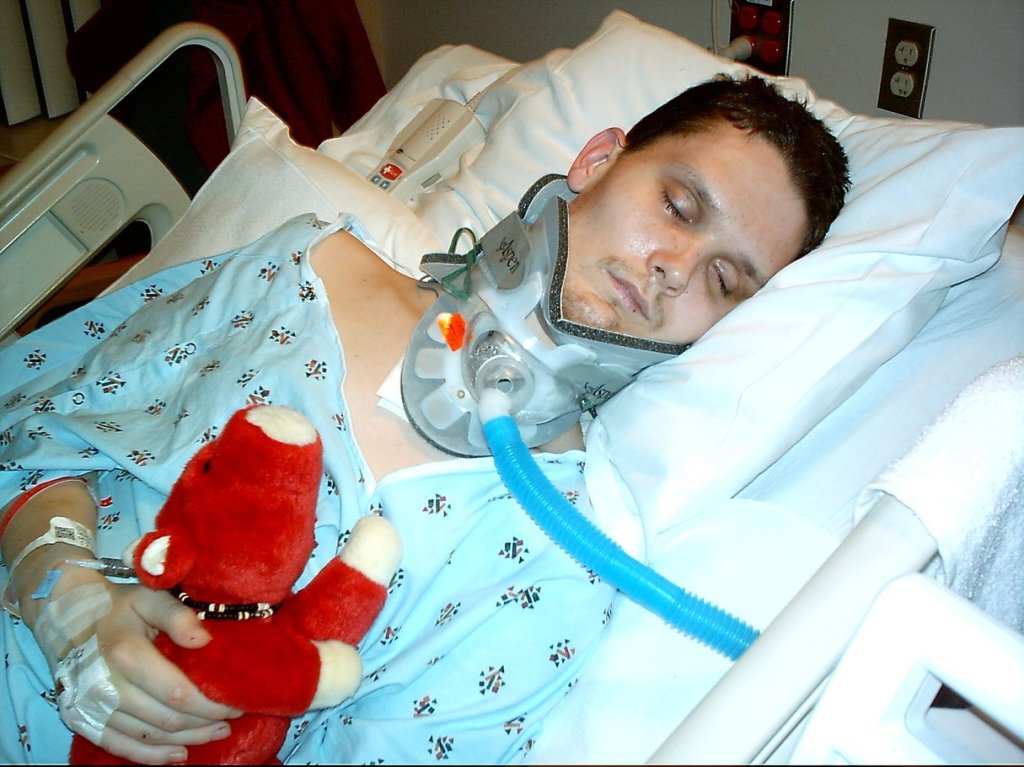
This ordeal was very traumatic for my family and me. We had three other children at home, including a 1-year-old. My husband and I alternated spending evenings at the hospital with Aaron. The other evenings were spent at home with our other children. We strongly felt that it was essential to live as normally as possible for the sake of our family. Therefore, my husband and I resumed our full-time work schedules after a week from work. It wasn’t easy for either one of us. When we weren’t at work, we were either parenting solo at home or at the hospital with Aaron. To say I was a little sleep-deprived and emotionally spent was an understatement.

Yet, going to work was healthy for me. It distracted me from my concerns for Aaron. I was capable of doing my job well for the most part. Many of my co-workers knew my situation and were empathetic and understanding. Coincidentally, I got a new manager a few weeks after Aaron’s accident. We had exchanged no more than a hello. She wasn’t aware of my son’s accident.

One afternoon, I was meeting with a room full of people, including my new manager. Someone was giving a presentation.  It was a sunny afternoon, and someone turned the lights off to let everyone see the presentation better. Unfortunately, the time of day, the darkened room, and my sleep deprivation caused me to get a little drowsy. I was sitting near the screen in the front of the room, and my drowsiness was noticeable to others.  My new manager was one of them.

A few days passed since that meeting. Another person in our department approached me. They mentioned that my new manager told them she was disappointed in my lack of enthusiasm and disinterest in work. They asked why she had this impression of me. She told them she had seen me nodding off in a critical meeting. Thankfully, my colleague told my new manager that her impressions of me were inaccurate. I was nodding off in the meeting because I was spending evenings at the hospital. My son was in a coma.  

My new manager’s reaction wasn’t even remotely out of the ordinary. Have you ever worked with someone not pulling their weight on a project? Or have you seen a stranger behaving erratically in public? What was your first reaction? Often, we think badly of them. Ideally, we should look at them with empathy and kindness. We don’t know what personal battles that person is fighting. They could be experiencing something in their life that justifies their behavior.

Seeking to gain understanding before forming an opinion of someone is especially important when in a leadership position. It would have been kinder for my new manager to approach me first. She should have asked me how I was doing before formulating a negative view of me. I was fighting a difficult battle she knew nothing about at that moment. I needed her empathy and kindness instead of criticism.

Mental Health

Positive Surroundings Elevate Well-Being

“It has to be in this drawer,” I thought as I rummaged through my desk, searching for something. Before I knew it, I emptied out two drawers I rarely use. Wow! Who knew these drawers held so many memories?

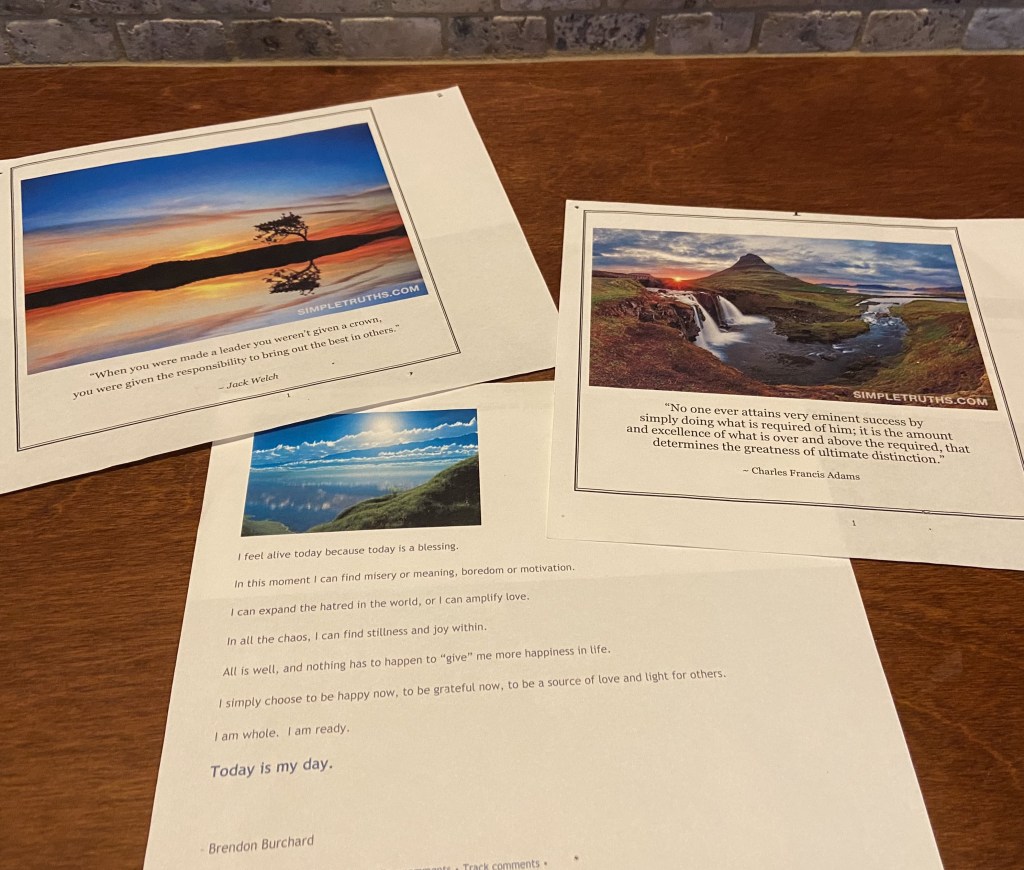
I’ve always believed in surrounding myself with things that lift my spirit and keep my mind focused on the positive. When I worked professionally, my cubicle walls were covered with inspirational quotes I had read in emails, found online, or discovered in books. Alongside them were family pictures and heartfelt notes from my children. Our mental health is deeply connected to the people and things we surround ourselves with, and having these reminders in my workspace was invaluable.

It’s been almost three years since I retired. Yet, here I was, rediscovering these pieces of encouragement buried in my desk drawers. Rereading them stirred up so many emotions. They reminded me of the type of leader and colleague I strived to be—the one who lifted others up and made their day a little brighter. A part of me misses those coworkers. I truly cherished them.

But those days are behind me now. While I’m no longer around coworkers, I’m still surrounded by people—my family, neighbors, fellow choir and church members, the children I serve lunch to, and the students I guide as a substitute teacher. The opportunities to lift others up haven’t disappeared; I likely have more now than I did in the workplace.

So why were these positive messages hidden away in a drawer? I need to see them! I need those reminders every day.

Retiring from professional life doesn’t mean our impact on others fades. If anything, I now have more time to offer kindness. I can prepare a meal for a family welcoming a new baby, send a note to someone grieving or recovering from illness, step into a classroom when a teacher needs to be away and serve lunch to my grandchildren and their classmates once a week. These purposeful opportunities fulfill my continuing wish to lift others up and make their day a little brighter.

I’m so grateful I emptied those drawers! Among the notes, I found a quote from Brendon Burchard: “I simply choose to be happy now, to be grateful now, to be a source of love and light for others.” No matter our age, vocation, or stage in life, surrounding ourselves with uplifting people and positive reminders is essential for our well-being.

Now, all I need is a tack. This inspirational quote belongs on the wall—not buried in a drawer.

Mental Health

The Stigma of Mental Illness vs. Physical Illness

On a sunny August afternoon, I came home from work. I found my 17-year-old son, Aaron, lying on the sofa moaning in pain.  He was very nauseated and running a fever.  That night we took him to the Emergency Room where a CT scan revealed he had appendicitis.  His appendix needed to be removed as soon as possible.  The surgery was scheduled immediately, and gratefully it went smoothly.

The next morning we came back to the hospital to visit Aaron.  Knowing what room he was in, we simply walked through the door of the hospital and took the elevator to the floor where he was staying.  No one stopped us at the hospital entrance and asked who we were visiting.  They never called the nurse’s station on the hospital floor to get permission for us to go to his room. They did not ask us to lock up our personal belongings. We did not have to go through a metal detector before visiting him.  It seems absurd, doesn’t it? Why should you have to pass through metal detectors to visit your loved one in a hospital?

When Aaron was fifteen he became very ill with a difficult-to-treat case of schizophrenia.  As a result, he has spent a lot of his life passing through different mental health facilities.  Every time we visited Aaron at the Milwaukee County Mental Health Complex, we stopped at the front desk. We had to tell them who we came to visit.  They called the ward where he was staying to get permission for us to see him.  Once they confirmed it was ok for us to continue, they had us lock up our belongings.  Finally, they took a metal detecting wand and checked our front and back for weapons.  This process caused me to shake my head in wonderment.  Was my son in a hospital or was he in a prison?

The differences between many Mental Health facilities and hospitals that mainly treat people’s physical issues are noticeable. They don’t just stop at the lobby.  Most hospital rooms are outfitted with comfortable beds, televisions, and walls painted with pleasant colors intended to calm and comfort the patient.  In many mental health facilities Aaron was admitted to it looked like the walls had not been painted for years.  The rooms were often shared by patients. Each patient only had a low platform bed to sleep on.  Patients considered themselves lucky if there was one working TV in a common room. There were only a few channels for them to choose from. Having a TV in their room was out of the question.  I understand that the stark nature of the furnishings and bed linens is intentional. It aims to keep people safe from personal harm.  Still, shouldn’t the intent also be to create a calm and comforting environment to help the patient heal?  I rarely walked into a calm and comforting environment when walking through the halls of a mental health facility. 

Is it any wonder that many people with mental illness don’t seek help for their disorders?  According to the American Psychiatric Association, stigma surrounding mental illness prevents over half of people with mental illness from receiving help for their disorders.  The 3 types of stigma researchers identify are public stigma, self-stigma, and institutional stigma.  Institutional stigma promotes policies. These policies create significant disparities in the environment and care people receive in mental health facilities compared to hospitals for the physically ill.

Aaron is 40 now.  I have observed the institutional care he has received for the past 25 years. I have only seen limited positive change, if any.  In recent years, mental illness has gotten more visibility. This is due to the impact many have felt from COVID-19 and the social policies created because of it.  This is unfortunate, but at the same time, I’m hoping it is a blessing in the long run.  When more people talk about mental illness, understanding increases. With greater understanding, the likelihood of positive change will finally be realized.  Institutional stigma can be reversed.

“Stigma, Prejudice and Discrimination against People with Mental Illness.” Psychiatry.org – Stigma, Prejudice and Discrimination Against People with Mental Illness, Jeffrey Borenstein, M.D., Aug. 2020, https://www.psychiatry.org/patients-families/stigma-and-discrimination.

Mental Health

Like a Thief in the Night

“Like a thief in the night” is an idiom used for thousands of years, originating from the Bible. 1 Thessalonians 5:2 states, “the Day of the Lord will come like a thief in the night.” Like many authors and songwriters, I will use this idiom to describe what I have experienced with my son. Mental Illness is like a thief in the night, unexpectedly robbing many of their abilities, skills, and life ambitions.

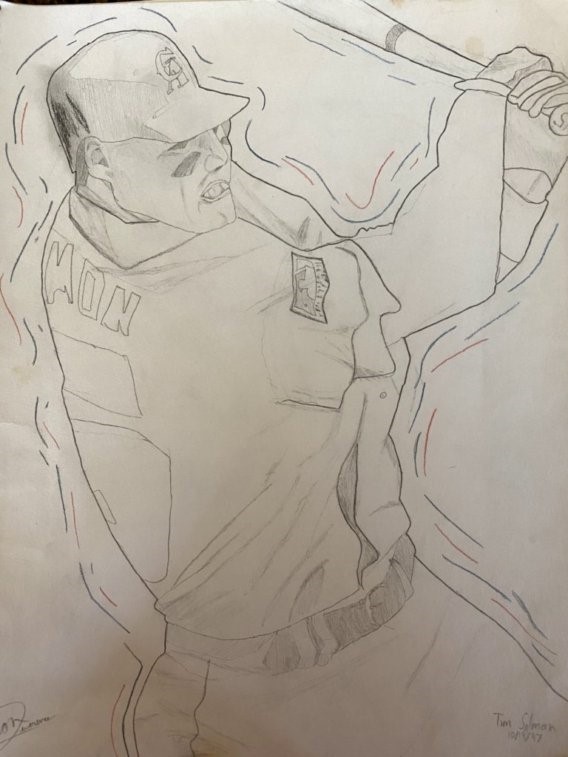
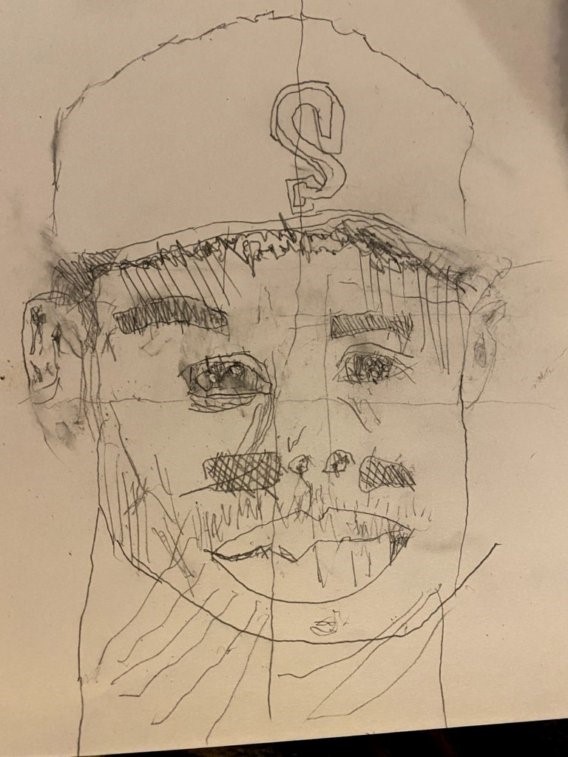
As parents, we can be known to exaggerate our children’s abilities. It is no exaggeration, however, that my oldest son, Aaron, was a talented artist.  At the young age of three, he was drawing cartoons like a professional cartoonist. He could reproduce well-known cartoon figures like the Mario Brothers characters. It was a gift! His drawings would start as a few lines and swoops, and suddenly, a perfectly drawn Mario, Koopa Troopa, Bowser, or Daisy would materialize on his sketch pad. As Aaron grew older, his artistic skills matured, and he won awards because of them.  As a teenager, he especially liked to draw pretty girls and baseball players.

Shortly before Aaron showed mental illness symptoms, we noticed his drawing skills getting worse. After over 25 years of severe schizophrenia, Aaron can barely draw anymore. To show how much schizophrenia has affected his drawing, look at these pictures. Aaron drew the picture on the left a year before his symptoms appeared; he drew the middle picture several years ago, and he drew the picture on the right in the last couple of years. Aaron hasn’t drawn in months. His illness has not only robbed him of his ability to draw but also his ability to write, read, and sometimes even remember what day it is.

While Aaron is affected more than anyone by what he’s lost because of schizophrenia, we’re all affected indirectly.  Aaron was on a trajectory to becoming a very productive member of society.  He was above average intellectually, and when he was 13 years old, he enjoyed programming computer games.  Now, instead of contributing to our society as a software engineer for a computer gaming company, he is one of more than 12,000 people under 65 receiving Social Security Disability benefits.  Aaron wants to work, but schizophrenia has robbed him of this privilege.

Mental illness does not impact everyone as significantly as it does Aaron, but about 20% of all U.S. adults, regardless of gender, race, age, or socio-economic background, suffer from a mental health disorder. The impact on the economy is staggering.  A report commissioned by the American Heart Association CEO Roundtable identifies an annual cost of $210 billion to the American economy due to depression alone. Because so many mental health disorders go unreported, this cost is undoubtedly far greater than identified.

With staggering costs to the economy and so many affected by mental illness, it’s surprising how little the federal government invests in Mental Health Research. While the budget for the National Institute of Mental Health (NIMH) rose to $2.14B in 2022, it’s still a fraction of the $6.9B allocated to the National Cancer Institute (NCI) during the same time. More attention and resources ought to be applied to preventing and managing mental illness in the United States from both the public and private sectors.

Minimizing the impact of mental illness on individuals, families, and the nation is something I believe most agree is very important. We need to unite as a nation to provide mental health care for everyone in our communities so we don’t lose anyone to this “thief in the night”, mental illness.

https://www.ssa.gov/